
Urban construction projects have grown increasingly complex, demanding equipment that can deliver materials with precision, speed, and reliability. Among the many machines that keep city building sites moving, the concrete mixer truck stands out as an indispensable asset. From towering residential complexes to sprawling commercial developments, these vehicles bridge the gap between batching plants and active pour zones, ensuring that ready-mixed concrete arrives at exactly the right consistency and exactly the right time.
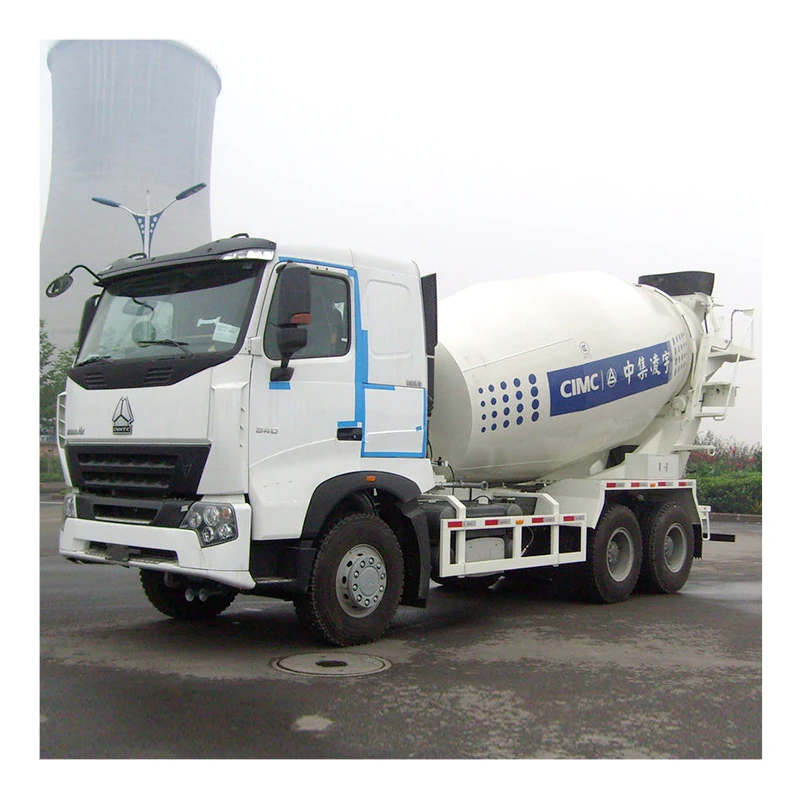
The rising popularity of advanced models is not accidental. As city planners push for faster completion schedules, tighter safety standards, and reduced environmental footprints, construction companies are turning to next-generation equipment to stay competitive. A modern concrete mixer truck does far more than simply rotate a drum — it integrates intelligent controls, durable drivetrain engineering, and ergonomic operator interfaces that collectively redefine productivity on dense urban job sites. Understanding why these machines have become so dominant in today's city construction landscape reveals important insights for project managers, procurement specialists, and fleet operators alike.
Urban job sites present challenges that rural or highway construction rarely encounters. Narrow streets, pedestrian-heavy zones, and multi-story scaffolding mean that every vehicle operating in the area must be both compact enough to maneuver and powerful enough to handle full drum loads. An advanced concrete mixer truck is engineered with these constraints in mind, featuring tighter turning radii, reinforced axle configurations, and low-clearance chassis designs that allow drivers to navigate city corridors without compromising payload capacity.
Traffic congestion is another significant factor. In a dense urban environment, delays are inevitable, which means the concrete inside the drum must maintain its workability for extended periods. Premium drum sealing technology and variable rotation speed controls allow operators to keep the mix homogeneous even when stuck in gridlock. This level of adaptive performance directly reduces material waste and costly rejected loads, making the advanced concrete mixer truck a financially sound choice for city-based contractors.
Site access restrictions also play a role. Many urban construction projects impose time windows for heavy vehicle entry, requiring rapid unloading and quick departure. The high-efficiency discharge chutes and hydraulic systems found on modern units allow full drum emptying in considerably less time, helping operators comply with municipal access regulations while maintaining workflow momentum.
City construction rarely involves small pours. Foundations for skyscrapers, underground parking structures, and elevated highways all demand enormous quantities of concrete delivered in a continuous, coordinated sequence. A single advanced concrete mixer truck with a 10-cubic-meter drum capacity can make the difference between a pour that proceeds smoothly and one that experiences cold joints due to material delays. When multiple units are dispatched in a carefully scheduled rotation, the entire supply chain becomes far more predictable.
Modern fleet management tools allow construction supervisors to track each concrete mixer truck in real time, optimizing dispatch schedules and reducing turnaround times between the batching plant and the pour site. This logistics intelligence is particularly valuable in urban environments where unpredictable delays can cascade through an entire day's work plan.
One of the primary reasons advanced concrete mixer truck models have gained traction in urban construction is their substantially improved drivetrain engineering. Modern units, such as those built on robust 6x4 chassis platforms, combine high-torque diesel engines with multi-speed transmissions calibrated for stop-and-go city driving. The result is a vehicle that can accelerate from traffic lights under full load without laboring, sustain consistent speed on inclined city approach roads, and brake safely in densely populated zones.
Heavy-duty axle assemblies rated for higher gross vehicle weights mean that contractors can load these trucks to full drum capacity without compromising component longevity. This translates directly into lower cost-per-cubic-meter delivered, a metric that procurement teams scrutinize closely when calculating project budgets. The durability advantage also reduces maintenance downtime, ensuring that the concrete mixer truck fleet remains available during critical pour windows.
Improved suspension geometry further contributes to stability when navigating uneven urban terrain, such as construction site ramps, temporary road surfaces, and steel bridge decking. Engineers have refined the relationship between drum weight distribution and chassis flex, reducing the risk of tipping incidents that historically plagued older designs operating on compromised urban surfaces.
The rotating drum is the heart of any concrete mixer truck, and modern drum engineering has advanced significantly. High-strength steel alloys, precisely calculated internal blade geometries, and improved sealing compounds work together to minimize mix segregation even during extended transit times. For urban projects where the journey from batching plant to pour site may involve thirty minutes or more of stop-and-go driving, this mix quality preservation is essential to achieving specified compressive strength outcomes.
Variable-speed hydraulic drive systems allow operators to adjust drum rotation independently of engine RPM, providing fine-grained control over agitation intensity. During transit, lower rotation speeds conserve fuel and reduce mechanical wear. Upon arrival at the pour site, higher speeds can re-homogenize the mix if any settling has occurred. This dual-mode capability makes the advanced concrete mixer truck adaptable to a wide range of project specifications without requiring manual intervention beyond a simple control adjustment.
Water dosing systems integrated into the drum filling process further enhance consistency. Operators can fine-tune the water-cement ratio at the point of loading, compensating for variations in aggregate moisture content that batching plants may not fully account for. The outcome is a more reliable concrete product that meets structural engineering requirements with greater consistency across multiple deliveries.
Operating costs are a central concern for any construction fleet manager, and advanced concrete mixer truck designs address this directly. Engine calibrations optimized for urban duty cycles, combined with intelligent idle-reduction systems, bring measurable fuel savings over older-generation units. In a city where a truck may spend a significant portion of its shift in low-speed or stationary conditions, these efficiency gains accumulate rapidly across a working week.
Reduced fuel consumption also connects to lower emissions output, which is increasingly relevant as urban municipalities implement stricter environmental regulations on construction vehicle fleets. Contractors operating modern concrete mixer truck units are better positioned to comply with low-emission zone requirements, avoiding costly fines and project delays tied to regulatory non-compliance. Some jurisdictions have begun incentivizing cleaner fleet upgrades, creating an additional financial rationale for investing in advanced machinery.
Maintenance economics also favor advanced units. Improved component tolerances and better corrosion-resistant coatings on exposed metal parts extend service intervals and reduce the frequency of unplanned breakdowns. For a contractor managing a fleet of mixer trucks across multiple simultaneous urban projects, minimizing unexpected downtime has a direct and measurable impact on project delivery timelines and associated penalty risk.
Urban construction environments are inherently more hazardous than open rural sites. Pedestrian traffic, cyclists, utility workers, and other construction vehicles all share the same limited space. Advanced concrete mixer truck designs incorporate enhanced visibility systems, including wide-angle rear-view cameras, proximity sensors, and improved mirror configurations, that significantly reduce the risk of collision incidents during reversing and tight maneuvering operations.
Operator fatigue is a well-documented safety risk on long urban shifts. Modern cab designs address this through improved seat ergonomics, reduced vibration transmission from engine and road surfaces, and intuitive dashboard layouts that minimize the cognitive load on drivers. A less fatigued operator makes better decisions in complex traffic environments, directly contributing to on-site safety outcomes that matter both to workers and to the insurance and liability calculations of construction firms.
Training requirements have also been simplified by cleaner control logic in newer concrete mixer truck models. When drum operation, hydraulic controls, and vehicle diagnostics are presented through well-organized digital interfaces, operators with varying experience levels can achieve competency more quickly, reducing the skilled-driver bottleneck that many urban construction companies face in competitive labor markets.
Urban construction projects operate under intense schedule pressure. Delays carry financial penalties, disrupt business operations in surrounding areas, and generate negative community relations. The advanced concrete mixer truck contributes to schedule adherence in multiple practical ways. Faster discharge rates, higher payload capacities, and improved reliability mean that contractors can complete pours within planned time windows, avoiding the costly scenario of a pour that must be halted and restarted due to equipment failure or slow delivery.
Just-in-time concrete delivery strategies, now widely adopted by urban project managers, depend entirely on the dependability of the mixer fleet. When each concrete mixer truck in a rotation performs predictably and arrives within tight scheduling tolerances, the entire construction sequence flows more efficiently. Advanced units with telematics integration allow dispatchers to monitor transit progress and proactively adjust pour schedules if a delay is detected, turning potential disruptions into manageable adjustments.
The scalability of mixer truck fleets also suits the modular nature of urban construction. A project that begins with foundation work and progressively advances to structural framing, core walls, and floor slabs requires different pour volumes at different stages. A well-managed fleet of advanced concrete mixer truck units can be scaled up or down between project phases without the capital inefficiency of maintaining oversized fixed equipment on site throughout the entire construction duration.
Sustainability has moved from a corporate aspiration to an operational requirement in many urban construction contracts. Clients, governments, and financing institutions increasingly demand documented environmental performance as part of project delivery. The advanced concrete mixer truck supports these goals through lower emissions, reduced material waste, and more precise delivery volumes that minimize the over-ordering of concrete that historically led to significant disposal challenges.
Some advanced units are being designed with compatibility for alternative fuels and hybrid powertrains in mind, positioning fleet operators for a future where urban emission restrictions are expected to tighten further. Investing in a technologically advanced concrete mixer truck today therefore carries a degree of regulatory future-proofing that older equipment cannot provide. For companies building long-term reputations in urban construction markets, this forward compatibility is a meaningful strategic differentiator.
Noise reduction engineering is another sustainability dimension. Urban residents and neighboring businesses are increasingly vocal about construction noise, and municipalities are responding with tighter noise ordinances. Modern concrete mixer truck designs incorporate acoustic insulation improvements and hydraulic system refinements that measurably reduce operational noise levels, helping contractors maintain productive relationships with community stakeholders throughout project execution.
A 10-cubic-meter drum capacity is widely regarded as the practical optimum for most urban construction scenarios. It balances payload efficiency with the weight and size constraints imposed by city road networks. Larger capacities may deliver economic advantages on open-site projects but can create access and loading challenges in dense urban environments where every cubic meter of drum capacity must arrive at the pour site within regulatory weight limits.
Modern units address transit delay challenges through variable-speed drum rotation controls, high-quality drum sealing, and in some cases integrated water dosing systems. By maintaining the drum at an optimal low-agitation rotation speed during delay periods, the mix remains homogeneous and workable without excessive mechanical wear. If delays are severe, operators can adjust rotation speed upward upon arrival to re-homogenize the mix before discharge.
A well-maintained used concrete mixer truck from a reputable platform can represent excellent value for contractors looking to expand fleet capacity without the full capital commitment of a new unit. The key evaluation criteria include engine hours, drum condition, hydraulic system integrity, and the availability of manufacturer parts support. Purchasing through verified channels with documented service histories significantly reduces procurement risk and can deliver the performance advantages of advanced engineering at a substantially lower acquisition cost.
Fleet telematics systems provide dispatchers and project managers with real-time visibility into each concrete mixer truck location, transit time, and operational status. This data enables dynamic scheduling adjustments that keep pour sequences on track despite urban traffic variability. Over time, accumulated telematics data also reveals patterns in route efficiency, driver performance, and maintenance needs, allowing fleet managers to make evidence-based decisions that reduce operating costs and improve overall delivery reliability.
Copyright © 2026 Shandong TruckLink Exporters Co.,Ltd.All rights reserved.
 EN
EN
 AR
AR
 BG
BG
 HR
HR
 CS
CS
 DA
DA
 NL
NL
 FI
FI
 FR
FR
 DE
DE
 EL
EL
 HI
HI
 JA
JA
 KO
KO
 PL
PL
 PT
PT
 RO
RO
 RU
RU
 ES
ES
 TL
TL
 ID
ID
 SR
SR
 UK
UK
 VI
VI
 SQ
SQ
 TH
TH
 TR
TR
 AF
AF
 MS
MS
 HY
HY
 AZ
AZ
 KA
KA
 BN
BN
 LO
LO
 LA
LA
 MN
MN
 MY
MY
 KK
KK
 UZ
UZ
 KY
KY