

Purchasing a concrete mixer truck is a significant capital investment for any construction business, fleet operator, or infrastructure contractor. Before committing to a unit, buyers must move beyond surface-level specifications and examine the actual performance factors that determine whether a machine will deliver reliable output under real working conditions. Understanding how to evaluate a concrete mixer truck systematically can mean the difference between a long-term asset and a costly operational liability.
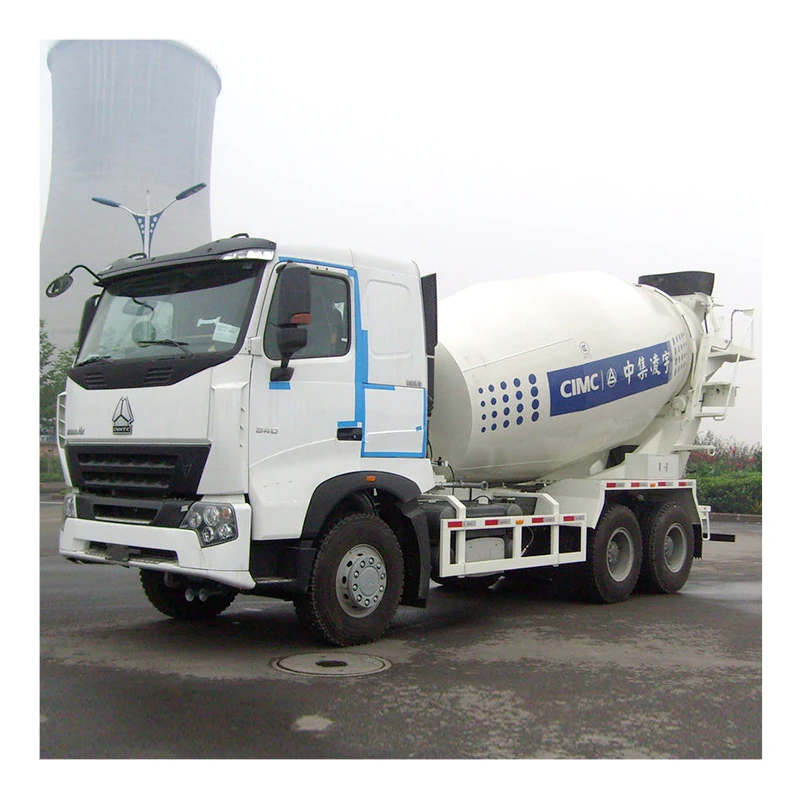
The evaluation process for a concrete mixer truck is not a single-step checklist — it is a structured assessment involving mechanical inspection, operational testing, documentation review, and alignment with your specific jobsite demands. Whether you are sourcing a brand-new unit or considering a well-maintained used concrete mixer truck for your fleet, applying a rigorous pre-purchase evaluation framework protects your investment and ensures operational continuity from day one.
The drum is the heart of any concrete mixer truck, and its capacity directly determines how much concrete can be transported and mixed per cycle. Standard drum capacities range from 6 cubic meters to 14 cubic meters, but the stated capacity alone does not tell the full story. Buyers should assess the actual geometric loading ratio, the blade angle inside the drum, and whether the drum rotation speed is adjustable to accommodate different concrete grades and slump requirements.
Mixing efficiency relates to how uniformly the concrete is blended during transit. A poorly designed drum or worn internal blades can cause segregation of aggregates, leading to inconsistent concrete quality at the discharge point. When evaluating a concrete mixer truck, request a live mixing demonstration with a standard concrete mix to observe uniformity, discharge smoothness, and cycle time. Any irregular noise from the drum during rotation may signal bearing wear or blade damage that will affect performance.
The drum's rotation mechanism — whether hydraulically driven or mechanically driven — also matters. Hydraulic systems offer smoother control and are generally more forgiving under variable load conditions, while mechanical systems may require more maintenance attention over time. Clarify which system is installed and review its service history before making a purchase decision.
The engine is the primary driver of both vehicle mobility and drum operation. When evaluating a concrete mixer truck, engine displacement, horsepower rating, and torque output must be matched against the typical terrain and payload demands of your projects. A unit with insufficient torque will struggle on grades, strain components prematurely, and result in higher fuel costs and faster wear.
Drivetrain configuration — commonly 6x4 for heavy-duty transit mixer applications — affects load distribution, traction, and overall vehicle stability when fully loaded. Buyers should verify that the axle ratings are consistent with the gross vehicle weight when the drum is loaded to its maximum capacity. Axle overload is a common source of premature suspension and tire failure in improperly specified concrete mixer truck units.
During a pre-purchase test drive, pay attention to gear transitions, clutch response, and braking distance under load. These observable behaviors reveal the true condition of the drivetrain far more reliably than specification sheets alone. A thorough engine compression test conducted by a qualified mechanic can also detect internal wear that is not visible during a surface inspection.
The hydraulic system powers drum rotation and, in many configurations, also supports the water pump and chute controls. When assessing a concrete mixer truck, hydraulic integrity is critical because failures in this system directly halt mixing and discharge operations. Inspect hydraulic hoses for signs of cracking, bulging, or surface hardening, which indicate age-related degradation or exposure to excessive pressure.
Request a full hydraulic pressure test to verify that the system maintains specified operating pressure without dropping under sustained load. Any pressure inconsistency typically points to a worn pump, damaged seals, or contaminated hydraulic fluid. These issues are repairable, but they should be factored into your total cost of ownership calculation when negotiating the purchase price of the concrete mixer truck.
Also examine the hydraulic oil reservoir for signs of contamination — milky or dark-colored oil suggests water intrusion or thermal degradation. Fresh, clean hydraulic fluid indicates a unit that has been properly maintained, which is a reliable proxy for the overall maintenance culture of the previous owner or operator.
A functional water supply system is essential for concrete hydration adjustments during transit and for efficient drum cleaning after discharge. The water tank capacity on a standard concrete mixer truck typically ranges from 400 to 700 liters. Buyers should inspect the tank for corrosion, leaks, or sediment buildup that could compromise water quality and interfere with concrete consistency.
The washout system — including spray nozzles, pump operation, and drain valves — should be tested during the pre-purchase inspection. Incomplete or slow washout extends turnaround time between loads and accelerates concrete buildup inside the drum, which over time reduces effective capacity and increases drum imbalance. A well-maintained washout system is a sign of disciplined operational management for any concrete mixer truck.
The chassis of a concrete mixer truck is subjected to enormous cyclical stresses due to the dynamic weight of a rotating drum load. Frame cracks, repair welds, or evidence of previous collision damage are serious red flags that should either disqualify a unit or trigger a significant price renegotiation. Use a flashlight and, where possible, a mirror or borescope to inspect hard-to-reach sections of the frame rails.
Pay particular attention to the sub-frame that supports the mixer body — this is the interface between the vehicle chassis and the drum assembly, and it absorbs the most localized stress. Corrosion in this area weakens structural integrity and, if severe, may require costly fabrication work. Any concrete mixer truck with visible frame corrosion beyond surface rust should be evaluated by a structural engineer before purchase.
Suspension components, including leaf springs, shock absorbers, and air bags (if equipped), should be inspected for deformation, fluid leakage, or uneven wear. Sagging suspension on one side indicates overloading history or component fatigue and will affect vehicle handling and tire wear patterns during future operation.
The external drum body should be inspected for dents, cracks near the drum ring, and excessive concrete buildup at the discharge chute opening. Internal inspection — using a torch light through the drum opening — reveals the condition of the mixing blades. Severely worn or bent blades reduce mixing quality and increase the risk of motor strain in the concrete mixer truck during loaded operation.
Drum bearing condition can be assessed by listening for grinding or rumbling sounds during slow rotation with no load. Smooth, quiet rotation without lateral play in the drum suggests healthy bearings, while any noise or wobble indicates impending bearing replacement. Given that bearing replacement on a concrete mixer truck involves significant downtime and labor, this is a critical inspection point.
A comprehensive service record is one of the most valuable pieces of documentation a buyer can review before purchasing a concrete mixer truck. Look for regular oil changes, filter replacements, hydraulic fluid service, and drum bearing inspections recorded at appropriate intervals. Gaps in the service record — or the absence of records entirely — are warning signs that routine maintenance may have been deferred.
Parts availability is a practical consideration that many buyers overlook until they face a breakdown. Verify that the engine, hydraulic components, and drum drive system of the concrete mixer truck you are evaluating are supported by readily available spare parts through local or regional suppliers. Proprietary or obsolete components can create costly operational delays that offset any initial price advantage.
For a concrete mixer truck, both mileage and operating hours are relevant metrics, but operating hours may be the more meaningful indicator of wear since the drum runs independently of vehicle movement. A unit with relatively low mileage but high drum operating hours may have experienced significant internal wear that is not reflected in the odometer reading.
Context matters when interpreting usage data. A concrete mixer truck used on short urban routes with high daily cycle frequency experiences different stress patterns than one used for long-haul transit work with fewer daily cycles. Ask specifically about the types of projects the unit was deployed on — precast plant supply, ready-mix delivery, or remote site work — as this context shapes the wear pattern you should expect to find during inspection.
Where possible, obtain a third-party mechanical inspection report from a qualified heavy vehicle technician. This independent assessment adds credibility to the seller's claims and gives you an objective basis for price negotiation. For high-value purchases, the cost of a professional inspection is a small fraction of the potential savings or risk avoidance it can provide when evaluating a concrete mixer truck.
A concrete mixer truck that is technically in excellent condition may still be the wrong choice if its capacity or configuration does not align with your operational demands. Oversized units create inefficiency and excess fuel costs on small-volume pours, while undersized units result in too many trips and constrain productivity on large-scale placements. Define your average pour volume, delivery distance, and turnaround time requirements before narrowing your selection.
The discharge chute length and swing range are practical performance factors that influence on-site flexibility. A concrete mixer truck with a limited chute reach may require additional placement equipment on congested urban sites, whereas extended or belt-assisted discharge improves accessibility. Confirm that the unit's discharge configuration matches the typical site access constraints you encounter in your operations.
In many markets, a concrete mixer truck must comply with specific axle load regulations, emissions standards, and road safety requirements before it can legally operate. Verify that the unit's axle weight distribution — especially when loaded — complies with local bridge and road weight limits. Non-compliance can result in fines, route restrictions, or forced de-loading that disrupts delivery schedules.
Emissions certification is increasingly important, particularly in urban areas with low-emission zone regulations. Confirm the engine tier certification and whether the concrete mixer truck is equipped with emissions control systems such as diesel particulate filters or selective catalytic reduction units as required in your operating region. Purchasing a non-compliant unit may require costly retrofitting or create access restrictions that limit where the truck can operate.
The drum and hydraulic system condition are typically the most critical areas to inspect. A concrete mixer truck with worn internal blades or a degraded hydraulic circuit will deliver inconsistent concrete quality and experience frequent downtime. Combined with a review of the engine compression and service records, these checks give the most comprehensive picture of the unit's true operational condition.
While there is no universal threshold, a concrete mixer truck drum system with more than 8,000 to 10,000 operating hours typically warrants close inspection of blades, bearings, and the hydraulic drive. High hours are not automatically disqualifying if the unit has been regularly serviced, but they do signal that key wear components may be approaching or past their replacement interval.
Yes, a test drive under realistic load conditions is strongly recommended. Driving the concrete mixer truck with a loaded or partially loaded drum reveals handling characteristics, braking performance, transmission behavior, and any unusual vibrations or noises that would not be detectable during a static inspection. It also allows you to verify that drum rotation functions correctly during transit, which is essential for maintaining concrete quality.
A reputable seller of a used concrete mixer truck should provide the vehicle registration documents, service and maintenance records, original purchase invoice or import documentation if applicable, inspection certifications, and any warranty documentation for recently replaced components. Missing or incomplete documentation should be treated as a risk factor and discussed transparently before completing the purchase transaction.
Copyright © 2026 Shandong TruckLink Exporters Co.,Ltd.All rights reserved.
 EN
EN
 AR
AR
 BG
BG
 HR
HR
 CS
CS
 DA
DA
 NL
NL
 FI
FI
 FR
FR
 DE
DE
 EL
EL
 HI
HI
 JA
JA
 KO
KO
 PL
PL
 PT
PT
 RO
RO
 RU
RU
 ES
ES
 TL
TL
 ID
ID
 SR
SR
 UK
UK
 VI
VI
 SQ
SQ
 TH
TH
 TR
TR
 AF
AF
 MS
MS
 HY
HY
 AZ
AZ
 KA
KA
 BN
BN
 LO
LO
 LA
LA
 MN
MN
 MY
MY
 KK
KK
 UZ
UZ
 KY
KY