

Investing in concrete mixer trucks is a significant capital decision for any construction company, ready-mix supplier, or infrastructure contractor. The wrong purchase can lead to operational inefficiencies, excessive maintenance costs, and project delays that erode profit margins. Before committing to any fleet expansion or equipment upgrade, decision-makers must carefully evaluate a structured set of criteria that goes beyond simply comparing price tags. Understanding what truly drives value in concrete mixer trucks will help your organization make a purchase that delivers reliable performance over its full service life.
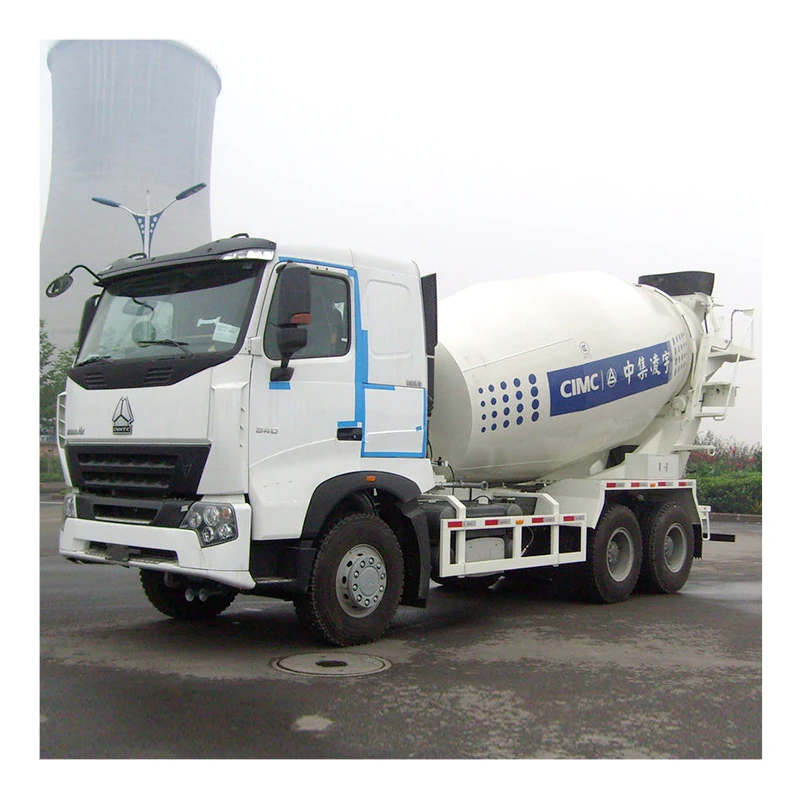
The market for concrete mixer trucks offers a wide range of options — from brand-new units built to the latest emission standards to high-quality used vehicles that provide exceptional value for budget-conscious buyers. Each option carries its own set of trade-offs in terms of upfront cost, residual value, parts availability, and operational readiness. This article walks through the most critical factors companies should assess before finalizing their purchasing decision, ensuring that every unit added to the fleet contributes positively to project timelines and bottom-line results.
One of the first and most important factors to examine is the drum capacity of the concrete mixer trucks you are considering. Drum capacity typically ranges from 6 cubic meters to 14 cubic meters or more, and selecting the right size depends entirely on the scale and nature of your projects. High-volume pours on large infrastructure sites demand trucks with larger drums, while urban residential projects may be better served by more maneuverable, mid-capacity units.
Oversizing your drum relative to your typical delivery needs leads to waste and added fuel costs, while undersizing forces multiple trips per pour, increasing labor hours and reducing site efficiency. Companies should analyze their average pour volumes, delivery distances, and site access conditions before specifying drum size. Getting this calculation right is foundational to justifying the investment in concrete mixer trucks at any scale.
It is also worth considering how drum capacity interacts with local axle weight regulations. Heavier loads may require specific chassis configurations, and operating overweight vehicles — even inadvertently — can result in regulatory penalties, road damage liability, or vehicle damage. Always confirm that the specified drum capacity aligns with permissible load limits in your operating jurisdiction.
The geographic range over which your concrete mixer trucks will operate is a critical variable in your buying decision. Concrete has a limited workability window after batching, typically 90 minutes under normal temperatures, which means delivery range must be tightly controlled. If your operation services sites within a compact urban radius, smaller and more agile trucks may be preferable. Long-haul deliveries to remote construction zones demand powerful, high-capacity units with robust cooling systems and reliable drum drive mechanisms.
Route conditions also matter enormously. Rough terrain, unpaved access roads, steep inclines, and poor infrastructure put significant strain on the chassis, suspension, and drum bearings of concrete mixer trucks. Buyers should evaluate the typical road conditions their fleet will face and ensure that the chassis specification — including axle configuration, tire rating, and ground clearance — is matched accordingly. A 6x4 chassis is a popular choice for mixed-terrain operations because it balances traction, load capacity, and fuel economy effectively.
The engine is the heart of any commercial vehicle, and concrete mixer trucks place particularly high demands on powertrain components due to the constant rotation of loaded drums while the vehicle is in motion. Engine displacement, torque output, and horsepower ratings must be evaluated in relation to the gross vehicle weight and typical operating gradient. Underpowered engines on heavy-duty applications cause excessive wear, overheating, and premature failure.
Fuel efficiency is equally important, especially for companies operating large fleets where fuel represents a major portion of operating costs. Modern diesel engines designed for concrete mixer trucks offer significantly improved fuel consumption rates compared to older units. When evaluating used trucks, it is worth investigating the engine generation and whether the unit meets current or near-future emission standards in your operating region to avoid compliance issues down the line.
Transmission type — manual or automatic — also affects both fuel use and driver fatigue. Automatic transmissions can reduce fuel consumption in stop-and-go urban delivery environments and lower the skill barrier for drivers, which matters in markets experiencing skilled labor shortages. The total cost of ownership calculation for concrete mixer trucks must include projected fuel costs over the intended service life of the vehicle.
The chassis configuration of concrete mixer trucks directly determines their load-bearing capacity, road stability, and suitability for different terrain types. The most common configuration for heavy-duty transit mixers is 6x4, providing six total wheels with four driven wheels, which delivers a strong balance between power and traction. Some operators in challenging terrain environments opt for 8x4 configurations to handle heavier drum capacities while maintaining compliance with axle weight limits.
Frame strength, spring rating, and brake system quality are all elements that must be checked carefully, particularly when purchasing used concrete mixer trucks. Mixer trucks experience significant torsional stress from the weight of rotating wet concrete, and frames that have been subjected to overloading or improper maintenance may show fatigue cracks or deformation. A thorough pre-purchase inspection of the chassis is non-negotiable for any serious buyer.
The mixing drum is arguably the most critical functional component of concrete mixer trucks, and its quality has a direct bearing on the longevity and reliability of the entire unit. Drums are typically manufactured from high-strength wear-resistant steel, and the quality of that steel — as well as the welding and fabrication standards applied — determines how long the drum will last before requiring repair or replacement. Thin-walled drums made from lower-grade steel are cheaper upfront but often require costly repairs within a few years of service.
The internal blade geometry of the drum is also worth examining closely. Blades designed with the correct pitch and curvature ensure thorough mixing, efficient discharge, and minimal concrete residue after unloading. Poorly designed blades can leave concrete buildup inside the drum, which hardens over time, reduces effective drum volume, and eventually leads to mechanical damage. Buyers evaluating concrete mixer trucks should inspect drum interior condition carefully, especially on used units.
The drum drive system — whether hydraulic or mechanical — is another area requiring careful scrutiny. Hydraulic drive systems are the industry standard for modern concrete mixer trucks because they provide smooth speed control during mixing, agitating, and discharging phases. The hydraulic pump, motor, and associated hoses and seals must be in sound condition to prevent leaks, pressure losses, and operational failures during deliveries.
On used concrete mixer trucks, the hydraulic system's service history is particularly important. Contaminated hydraulic fluid, worn seals, and damaged pump components can lead to sudden system failure at the most inconvenient times. Requesting maintenance records, conducting operational tests, and consulting with a qualified mechanic before purchase are all prudent steps when evaluating the drum drive system of any prospective acquisition.
Purchase price is an obvious consideration, but companies that focus exclusively on upfront cost when buying concrete mixer trucks often end up paying significantly more over the vehicle's service life. A lower-priced unit with high maintenance demands, poor fuel efficiency, and limited parts availability can easily cost more in three years than a higher-priced unit with a stronger reliability track record. Total cost of ownership analysis should include fuel consumption, scheduled maintenance intervals, expected repair costs, downtime risk, and residual value at disposal.
For companies looking to balance capital outlay with operational performance, quality used concrete mixer trucks present a compelling option. A well-maintained used unit from a reputable model line — such as a concrete mixer trucks with proven specifications and verifiable service history — can deliver excellent performance at a fraction of the cost of a new equivalent. The key is ensuring that the inspection process is rigorous and that any pre-existing issues are properly accounted for in the purchase negotiation.
Fleet managers should also factor in warranty terms, availability of after-sales support, and proximity to qualified service centers when calculating true ownership costs. Concrete mixer trucks that are difficult to service locally, or for which parts must be imported with long lead times, represent a hidden operational risk that can paralyze project schedules at critical moments.
Resale value is an often-overlooked component of the total cost equation for concrete mixer trucks. Established, widely-distributed truck platforms tend to retain value better than obscure models because there is a larger secondary market for them. When the time comes to retire or upgrade units from your fleet, being able to sell at a favorable residual value significantly reduces the net cost of ownership over the fleet's lifecycle.
Fleet lifecycle planning also involves knowing when to retire aging concrete mixer trucks before maintenance costs begin escalating steeply. A disciplined replacement cycle — informed by vehicle age, mileage, maintenance cost trends, and operational demands — prevents companies from holding onto deteriorating assets that reduce productivity and inflate costs. Planning for resale value at the point of purchase is a mark of sophisticated fleet management.
Regulatory compliance is a non-negotiable factor when procuring concrete mixer trucks, particularly in markets with increasingly stringent vehicle emission standards. Companies operating in or near urban zones may face restrictions on older diesel engines that do not meet current Euro or equivalent national emission norms. Purchasing a truck that fails to comply with local standards can result in operating bans, retrofit cost requirements, or accelerated replacement schedules.
Before purchasing, verify the engine standard of any concrete mixer trucks under consideration and cross-reference it with current and anticipated future regulations in your market. This is especially important for companies buying used units, where the engine generation may be several years behind current standards. Factoring in potential compliance retrofit costs or timeline risks protects the company from unexpected financial exposure post-purchase.
The availability of spare parts and the quality of after-sales support infrastructure are major determinants of operational uptime for concrete mixer trucks. Vehicles from platforms with widespread global distribution have the advantage of accessible parts, trained technicians, and established service networks. This translates directly into shorter repair turnarounds and lower fleet downtime, both of which are critical for companies with tight project delivery schedules.
When evaluating vendors or importers of concrete mixer trucks, ask specific questions about parts lead times, the depth of their technical support capability, and whether they offer any post-sale warranty or service contract options. A supplier that provides robust after-sales support adds tangible value that goes well beyond the transaction itself. For companies entering a new market or expanding into regions where their existing service network is thin, choosing concrete mixer trucks with strong local support infrastructure can be a decisive factor in the buying decision.
For most general construction and residential projects, concrete mixer trucks with drum capacities between 8 and 10 cubic meters offer the best balance of load volume, vehicle maneuverability, and regulatory compliance. Larger capacities are better suited for high-volume infrastructure projects where site access allows for heavier vehicles and pour schedules demand greater single-trip volumes.
The decision between new and used concrete mixer trucks depends on capital budget, intended service life, and risk tolerance. Used units from well-maintained fleets can offer significant cost savings, but they require thorough inspection and should come with verifiable service records. New trucks offer warranty protection and the latest technology, but carry higher upfront investment. Many companies strategically mix both in their fleets to manage capital deployment effectively.
The chassis platform is a major factor because it determines engine performance, parts availability, and long-term durability. Widely distributed chassis platforms used in concrete mixer trucks tend to have better support networks, more accessible spare parts, and stronger resale value compared to lesser-known alternatives. Buyers should prioritize platforms with proven track records in similar operating conditions to their own.
Concrete mixer trucks require regular inspection and cleaning of the drum interior to prevent concrete buildup, routine checks of hydraulic fluid levels and seal integrity, and consistent monitoring of drum blade wear. The chassis and drivetrain components also experience above-average stress due to the dynamic load of rotating wet concrete, making suspension and brake system inspections especially important in the preventive maintenance schedule.
Copyright © 2026 Shandong TruckLink Exporters Co.,Ltd.All rights reserved.
 EN
EN
 AR
AR
 BG
BG
 HR
HR
 CS
CS
 DA
DA
 NL
NL
 FI
FI
 FR
FR
 DE
DE
 EL
EL
 HI
HI
 JA
JA
 KO
KO
 PL
PL
 PT
PT
 RO
RO
 RU
RU
 ES
ES
 TL
TL
 ID
ID
 SR
SR
 UK
UK
 VI
VI
 SQ
SQ
 TH
TH
 TR
TR
 AF
AF
 MS
MS
 HY
HY
 AZ
AZ
 KA
KA
 BN
BN
 LO
LO
 LA
LA
 MN
MN
 MY
MY
 KK
KK
 UZ
UZ
 KY
KY