
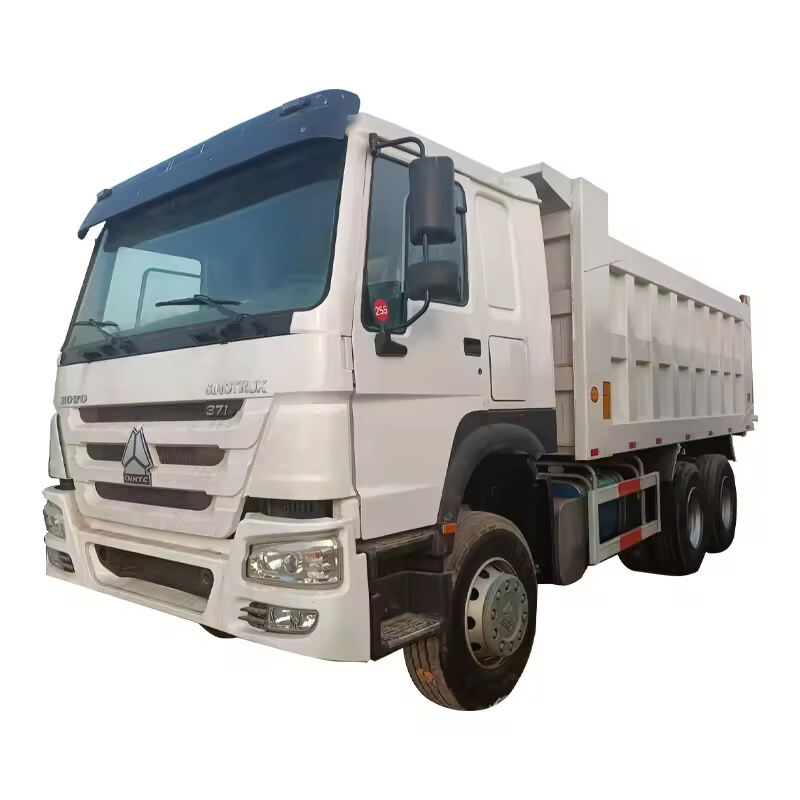
Construction firms across the globe rely on specialized equipment to execute projects efficiently, and among these machines, dump trucks stand as fundamental workhorses that enable countless operations. Understanding what applications make dump trucks essential reveals not just their mechanical capabilities, but their transformative impact on project timelines, cost management, and operational scalability. From hauling excavated materials to transporting aggregates for road construction, these vehicles bridge the gap between excavation sites and processing facilities, making them indispensable for firms managing earthwork, infrastructure development, and large-scale building projects.
The versatility of dump trucks extends far beyond simple material transport, encompassing critical applications that determine whether construction firms can meet deadlines, maintain budget constraints, and compete effectively in demanding markets. These applications span earthmoving operations, aggregate delivery systems, demolition waste removal, site preparation activities, and specialized hauling tasks that require both payload capacity and maneuverability. By examining the specific applications where dump trucks prove essential, construction managers gain clarity on fleet optimization, equipment investment priorities, and operational strategies that maximize return on capital deployed in heavy machinery.
Foundation excavation represents one of the most fundamental applications where dump trucks become absolutely critical for construction firms. When excavators dig deep trenches or basement foundations, the volume of displaced soil can reach hundreds or thousands of cubic meters depending on project scale. Dump trucks provide the continuous material removal capacity needed to keep excavation equipment productive, preventing work stoppages caused by accumulated spoil piles. A typical commercial building foundation might generate 500 to 2000 cubic meters of excavated material, requiring coordinated dump truck fleets that can cycle between dig sites and disposal areas with precision timing.
The efficiency of foundation excavation directly correlates with dump truck availability and payload capacity. Construction firms operating dump trucks with 40-ton capacities can significantly reduce cycle counts compared to smaller vehicles, minimizing fuel consumption and labor hours per cubic meter moved. This application demands trucks with robust hydraulic systems capable of handling dense, moisture-laden soils that can exceed 1.8 tons per cubic meter. Firms specializing in urban construction particularly value dump trucks with excellent maneuverability, as foundation sites often feature tight access constraints and require vehicles that can navigate confined staging areas while maintaining productivity.
Site grading projects that involve balancing cut and fill volumes represent another essential application where dump trucks demonstrate irreplaceable value. Large development sites frequently require moving material from elevated areas to lower zones, creating level building pads while minimizing off-site disposal costs. Dump trucks enable construction firms to implement efficient mass haul plans, where material cut from one location gets transported and placed as engineered fill elsewhere on the property. This internal circulation of earthwork materials can save projects substantial costs compared to importing fill material or paying disposal fees for excavated soils.
The effectiveness of cut and fill operations depends heavily on dump truck characteristics including payload capacity, cycle time performance, and ability to navigate varying terrain conditions. Projects involving several hundred thousand cubic meters of earthwork may require fleets of 15 to 30 dump trucks operating simultaneously to maintain excavator productivity and meet aggressive grading schedules. Construction firms benefit from dump trucks equipped with differential locks and all-wheel drive systems when working on sites with challenging topography, steep haul roads, or adverse weather conditions that create slippery surface conditions. The ability to maintain consistent cycle times regardless of site conditions separates high-performing dump truck fleets from those that experience frequent delays.
Utility trench construction creates a specialized application where dump trucks support both excavation removal and controlled backfill placement. Water lines, sewer systems, electrical conduits, and telecommunications infrastructure all require trenching operations that generate linear excavations sometimes extending for kilometers. Dump trucks remove the excavated material to temporary stockpile areas or disposal sites, then return with engineered backfill materials specified for proper compaction around installed utilities. This dual-role capability makes dump trucks particularly valuable for utility contractors who need versatile equipment that handles multiple phases of trench construction.
Trench backfilling demands precision that dump trucks with accurate hydraulic control systems can deliver effectively. Operators must place backfill material in controlled lifts, typically 200 to 300 millimeters thick, to allow proper compaction by following equipment. Dump trucks with graduated dump control enable this precise placement, preventing excessive material discharge that could damage installed pipes or conduits. Construction firms working on urban utility projects particularly value dump trucks with extended wheelbases that provide stability when dumping into narrow trenches, reducing the risk of vehicle tipping incidents that could halt operations and create serious safety hazards.
Road construction projects consume enormous quantities of crushed aggregate base materials, creating an application where dump trucks function as the circulatory system connecting quarries to paving operations. A single kilometer of four-lane highway typically requires 8,000 to 12,000 cubic meters of aggregate base material, representing hundreds of dump truck loads that must arrive at precise intervals to maintain paving crew productivity. Construction firms specializing in highway work often deploy dedicated dump truck fleets that operate in continuous rotation between aggregate suppliers and active paving zones, with sophisticated dispatch systems ensuring material availability never interrupts expensive paving equipment.
The economics of aggregate transportation make dump trucks with optimal payload-to-operating-cost ratios essential for profitable road construction. Firms calculate ton-mile costs that account for fuel consumption, tire wear, maintenance expenses, and driver labor, seeking dump trucks that minimize these factors while maximizing legal payload capacity. Highway projects located 30 to 50 kilometers from aggregate sources particularly benefit from dump trucks engineered for fuel efficiency and durability, as the cumulative transportation cost can represent 30 to 40 percent of total material delivered cost. Strategic dump truck selection directly impacts project profitability and competitive bidding capability for construction firms pursuing large infrastructure contracts.
Concrete production facilities rely on continuous sand and gravel deliveries that dump trucks provide with the consistency required for uninterrupted batching operations. Ready-mix plants may consume 200 to 500 tons of aggregates daily, requiring coordinated dump truck operations that replenish storage bins before depletion occurs. Construction firms operating their own concrete production benefit from dedicated dump truck assets that eliminate dependency on third-party haulers, providing schedule control and cost certainty for aggregate procurement. This application emphasizes reliability and consistent cycle times, as aggregate shortages can idle expensive concrete production equipment and delay critical placement operations.
Dump trucks serving concrete production applications often feature specialized configurations including reinforced dump bodies resistant to abrasion from sharp aggregates and smooth interior surfaces that facilitate complete material discharge. The ability to dump quickly and cleanly becomes crucial when multiple dump trucks queue at receiving hoppers, with total discharge time affecting overall fleet productivity. Construction firms managing high-volume concrete projects value dump trucks that can complete full dump cycles in under 90 seconds, minimizing wait times and maximizing the number of loads each vehicle can deliver per shift. This operational efficiency directly translates to lower material costs and improved project margins.
Hot mix asphalt transportation represents a time-sensitive application where dump trucks must deliver material within strict temperature parameters to ensure proper compaction and pavement quality. Asphalt plants produce material at approximately 150 degrees Celsius, and dump trucks must transport loads to paving sites before temperatures drop below acceptable placement thresholds, typically 135 to 140 degrees Celsius. This creates a logistical challenge where dump trucks function as mobile thermal storage units, with insulated beds and efficient routing essential for maintaining material quality during transport. Construction firms paving urban streets or remote highways both depend on dump trucks capable of meeting these thermal delivery requirements.
The paving industry has developed specialized dump truck configurations specifically for asphalt transportation, incorporating features like spray-on release agents, heated dump bodies, and insulated tarping systems. These enhancements prevent asphalt adhesion to truck beds while preserving material temperature during longer hauls, expanding the geographic service radius from asphalt plants. Construction firms operating in regions with dispersed project locations particularly value dump trucks that can maintain asphalt temperature over 45 to 60 minute haul durations, enabling them to bid on projects that would otherwise fall outside their economical service area. This capability expansion directly correlates with increased revenue opportunities and market competitiveness.
Demolition projects generate massive volumes of mixed debris that dump trucks must remove continuously to maintain productivity and site safety. A medium-sized commercial building demolition might produce 3,000 to 8,000 cubic meters of concrete rubble, steel components, wood framing, and mixed waste materials requiring transport to recycling facilities or disposal sites. Dump trucks enable demolition contractors to maintain clear work zones around excavators and specialized demolition equipment, preventing dangerous accumulations of debris that could collapse or create access obstacles. The continuous removal capacity that dump trucks provide directly influences demolition timeline and overall project cost.
Demolition applications subject dump trucks to particularly harsh operating conditions, with sharp concrete fragments, protruding rebar, and heavy impact loads during loading operations. Construction firms specializing in demolition work invest in dump trucks with reinforced bodies featuring extra-thick steel flooring and protective liners that resist punctures and tears from aggressive materials. The total cost of ownership for demolition-focused dump trucks must account for accelerated wear rates, with strategic selection of durable models reducing downtime and repair expenses. Firms that optimize dump truck durability for demolition applications gain competitive advantages through reduced equipment replacement cycles and improved operational reliability.
Environmental remediation projects create specialized applications where dump trucks must handle contaminated soils with protocols ensuring regulatory compliance and preventing environmental spread. Brownfield redevelopment, underground storage tank removals, and industrial site cleanups generate excavated materials requiring transport to approved disposal facilities with appropriate contamination handling certifications. Dump trucks serving this application must often meet special cleaning requirements, maintain load containment during transport, and provide documentation chains proving proper disposal. Construction firms working in environmental remediation markets value dump trucks that can accommodate these specialized requirements without compromising operational efficiency.
Regulatory compliance in contaminated material transport adds complexity that influences dump truck selection and operational procedures. Vehicles may require impermeable bed liners, secure tarping systems, and dedicated use protocols preventing cross-contamination between contaminated and clean material hauls. Some jurisdictions mandate GPS tracking and electronic load documentation for contaminated soil movements, requiring dump trucks equipped with telematics systems that automatically generate compliance records. Construction firms navigating these regulatory environments benefit from dump trucks designed with compliance features integrated rather than retrofitted, reducing administrative burden and liability exposure associated with environmental material handling.
Modern construction practices emphasize waste segregation and material recovery, creating applications where dump trucks support recycling operations by transporting separated material streams. Projects implementing waste diversion programs might deploy multiple dump trucks dedicated to specific materials including clean concrete for crushing, metal scrap for recycling, clean wood for biomass processing, and residual waste for disposal. This segregated approach maximizes material recovery value while minimizing disposal costs, but requires sufficient dump truck capacity to service multiple waste streams without creating collection bottlenecks. Construction firms committed to sustainability benefit from flexible dump truck fleets that can adapt to evolving waste management strategies.
The economics of construction waste recycling depend heavily on transportation efficiency, as hauling costs can consume much of the material recovery value. Dump trucks with optimal payload capacities reduce the per-ton transportation cost for recyclable materials, improving overall diversion program economics. Firms managing large projects with substantial recyclable material volumes may justify dedicated dump trucks for high-value streams like scrap metal, while using general-purpose vehicles for lower-value materials. This strategic deployment maximizes return on equipment investment while supporting corporate sustainability objectives that increasingly influence client selection criteria and project awards.
Construction firms operating in northern climates extend dump truck utilization into snow removal applications that generate revenue during traditionally slow winter months. Dump trucks equipped with front-mounted plows and spreader systems become versatile snow fighters capable of clearing large commercial properties, industrial facilities, and municipal roadways. The material hauling capacity inherent in dump trucks enables them to transport removed snow to designated disposal sites or melting facilities, providing complete snow management solutions beyond surface plowing. This seasonal application diversification improves annual equipment utilization rates and cash flow stability for construction firms facing weather-related project slowdowns.
Snow removal applications demand dump trucks with specific capabilities including all-wheel drive for traction on icy surfaces, powerful engines maintaining performance in extreme cold, and auxiliary hydraulic systems powering plow and spreader attachments. Construction firms investing in dump trucks suitable for dual-season use gain competitive advantages through improved equipment return on investment and workforce retention during winter months. The ability to redeploy construction dump trucks into profitable snow removal contracts prevents costly idle equipment periods while maintaining skilled operator employment year-round. This operational flexibility increasingly influences equipment acquisition decisions for construction firms in climate zones with distinct seasonal weather patterns.
Natural disasters and infrastructure failures create urgent applications where dump trucks become essential for rapid debris removal and emergency access restoration. Flooding events, hurricanes, earthquakes, and severe storms generate massive debris volumes requiring immediate clearance to restore transportation networks and enable emergency services access. Construction firms with readily deployable dump truck fleets can respond to disaster recovery contracts that offer premium rates reflecting urgency and challenging working conditions. These emergency applications demand equipment reliability and operator versatility, as dump trucks may operate continuously in austere conditions with limited support infrastructure.
Disaster recovery applications expose dump trucks to extreme operating environments including flooded roadways, unstable surfaces, and hazardous debris containing sharp objects and chemical contaminants. Firms positioning themselves for emergency response work invest in dump trucks with enhanced durability, water-resistant electrical systems, and operator protection features appropriate for hazardous environments. The ability to mobilize dump truck fleets rapidly following disaster events creates lucrative revenue opportunities while serving critical community recovery needs. Construction firms maintaining state of readiness for emergency deployments often secure retainer contracts with government agencies and insurance companies, providing stable revenue streams that complement traditional construction work.
Construction firms expanding into mining support services utilize dump trucks for applications including overburden removal, low-grade ore transport, and quarry development activities. While specialized mining trucks dominate large-scale extraction operations, construction-grade dump trucks fill essential roles in smaller mines, quarry expansions, and exploration projects where dedicated mining equipment would be economically unjustified. These applications require dump trucks capable of sustained high-cycle operations on rough haul roads, with durability and payload capacity determining operational cost per ton moved. Firms successfully entering mining support markets leverage existing dump truck assets to capture incremental revenue from resource extraction activities.
Mining applications subject dump trucks to operating intensities exceeding typical construction use, with daily cycle counts potentially reaching 30 to 50 loads per vehicle. This accelerated utilization compresses maintenance intervals and accelerates component wear, requiring firms to implement rigorous preventive maintenance programs preventing premature failures. Construction companies operating dump trucks in mining applications must carefully track actual operating costs including accelerated depreciation, increased maintenance expenses, and higher tire replacement frequencies. Despite these elevated costs, mining support contracts often command premium rates that justify equipment deployment when firms properly account for true operating expenses and implement appropriate pricing strategies.
Construction firms should target dump trucks with payload capacities ranging from 35 to 45 tons for optimal versatility across diverse applications. This capacity range accommodates legal highway weight limits while providing sufficient volume for lower-density materials like excavated topsoil and demolition debris. Firms focusing primarily on aggregate hauling may justify heavier-capacity models, while those emphasizing urban work with restricted access might prioritize smaller, more maneuverable units. The ideal capacity balances maximum legal payload against operational costs, as larger trucks consume more fuel and generate higher maintenance expenses that must be offset by increased productivity.
Dump trucks dramatically accelerate project timelines by enabling continuous excavation and material placement operations without interruptions for spoil pile management or material shortages. A properly sized dump truck fleet keeps excavators and loaders operating at full capacity, preventing expensive equipment idle time that can cost 150 to 300 dollars per hour in lost productivity. The rapid cycle times that dump trucks achieve between load and dump points, typically 15 to 45 minutes depending on haul distance, create material flow rates impossible with manual methods or smaller vehicles. This continuous operation capability allows construction firms to compress earthwork schedules by 30 to 50 percent compared to projects using inadequate hauling capacity.
Reliable dump truck performance in demanding applications requires disciplined preventive maintenance programs addressing hydraulic systems, structural components, and powertrain elements subjected to severe duty cycles. Daily inspections should verify hydraulic cylinder condition, dump body hinge points, and structural integrity of the chassis and body mounting systems. Engine oil and filter changes at manufacturer-specified intervals, typically 250 to 500 operating hours, prevent premature wear in dust-laden construction environments. Construction firms achieving optimal dump truck reliability implement comprehensive maintenance tracking systems that schedule service based on actual operating hours and load cycles rather than simple calendar intervals, preventing unexpected failures during critical project phases.
Dump truck ownership becomes financially justified when construction firms maintain consistent utilization exceeding 1,200 to 1,500 hours annually across their project portfolio. Ownership eliminates daily rental costs ranging from 400 to 800 dollars per truck while providing complete schedule control and immediate availability for emergency needs or unexpected opportunities. Firms with diversified project types spanning earthwork, demolition, and material supply can more easily achieve utilization thresholds justifying ownership compared to specialists with seasonal or intermittent demand. A thorough financial analysis should compare total ownership costs including depreciation, maintenance, insurance, and storage against cumulative rental expenses over a five-year planning horizon, with ownership typically providing superior economics when annual utilization exceeds the threshold range.
Copyright © 2026 Shandong TruckLink Exporters Co.,Ltd.All rights reserved.
 EN
EN
 AR
AR
 BG
BG
 HR
HR
 CS
CS
 DA
DA
 NL
NL
 FI
FI
 FR
FR
 DE
DE
 EL
EL
 HI
HI
 JA
JA
 KO
KO
 PL
PL
 PT
PT
 RO
RO
 RU
RU
 ES
ES
 TL
TL
 ID
ID
 SR
SR
 UK
UK
 VI
VI
 SQ
SQ
 TH
TH
 TR
TR
 AF
AF
 MS
MS
 HY
HY
 AZ
AZ
 KA
KA
 BN
BN
 LO
LO
 LA
LA
 MN
MN
 MY
MY
 KK
KK
 UZ
UZ
 KY
KY