

Choosing the right concrete mixer truck for heavy construction projects is one of the most consequential equipment decisions a contractor or fleet manager can make. The wrong choice can lead to frequent mechanical failures, costly downtime, and project delays that ripple across an entire construction schedule. In an industry where poured concrete must meet precise consistency standards and tight delivery windows, reliability is not just a feature — it is a fundamental requirement that directly affects project profitability and site safety.
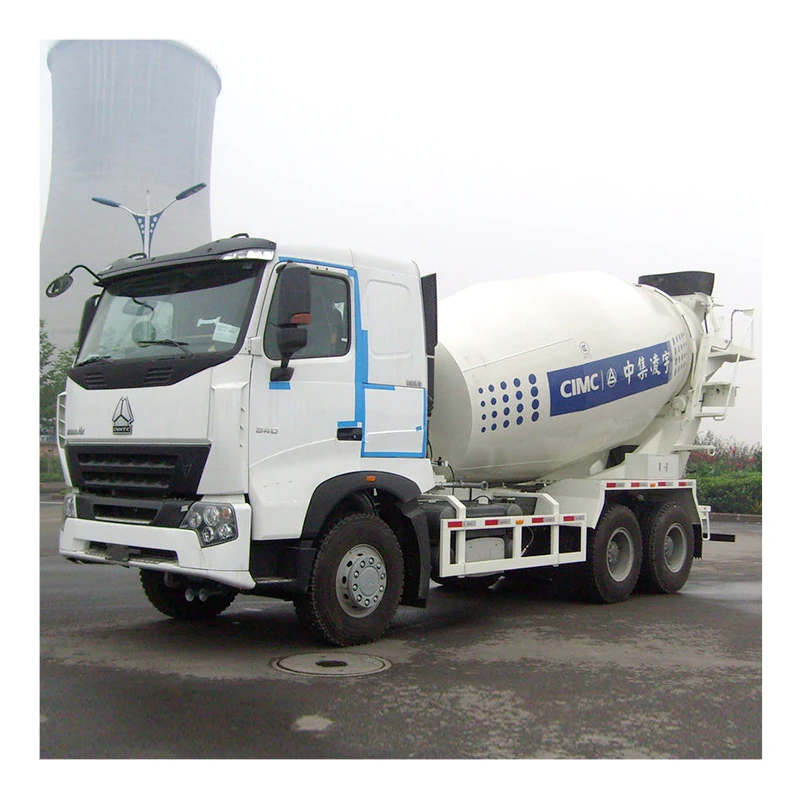
This article examines the key selection criteria and model characteristics that determine which concrete mixer truck configurations perform most consistently under heavy construction demands. Whether you are managing infrastructure projects, high-rise developments, or large-scale civil engineering work, understanding what separates a dependable unit from an unreliable one will help you make better procurement decisions and maintain operational continuity throughout your fleet lifecycle.
Heavy construction environments place extreme stress on equipment. A concrete mixer truck operating on a large infrastructure site may complete multiple deliveries per day, navigate rough unpaved terrain, and carry maximum drum loads consistently over months without significant rest periods. This workload exposes structural weaknesses in drum mounting systems, hydraulic circuits, axle assemblies, and engine cooling systems that less demanding applications might never reveal.
Reliable performance in this context means more than simply starting every morning. It means maintaining drum rotation consistency across varying ambient temperatures, sustaining hydraulic pressure stability under continuous load cycling, and delivering precise discharge control even after thousands of operating hours. A truck that performs adequately on smaller residential jobs may prove entirely inadequate when subjected to the continuous high-cycle demands of major construction projects.
When evaluating a concrete mixer truck for heavy-duty use, procurement teams should prioritize design specifications that were engineered with high-frequency commercial operation in mind, rather than units designed for occasional use and scaled up in appearance only.
Several technical indicators serve as reliable proxies for long-term durability. Engine displacement and torque curve characteristics indicate how comfortably a truck manages loaded uphill grades without thermal stress. Drum steel grade and wall thickness determine resistance to deformation and wear over time. The quality of the hydraulic drive system — including pump displacement, relief valve calibration, and oil cooling capacity — directly affects how consistently the drum rotates across temperature extremes.
Chassis frame construction is equally important. A concrete mixer truck built on a high-tensile steel ladder frame with full-length longitudinal rails handles dynamic load stress far more effectively than units with shorter or lighter frame architectures. Suspension geometry and axle load ratings should match or exceed the maximum gross vehicle weight under full drum capacity, providing a margin of safety that reduces fatigue cracking in structural components.
Finally, the accessibility of service points — oil filters, hydraulic reservoirs, drum drive components — affects real-world reliability indirectly but significantly. A truck that is difficult to service will be serviced less frequently, increasing the probability of preventable failures during active project phases.
Among the various axle configurations available in the concrete mixer truck segment, the 6x4 layout has established a strong reputation for durability in demanding construction environments. With two driven rear axles distributing traction and braking force across a broader mechanical base, this configuration significantly reduces individual axle stress compared to 4x2 alternatives operating at equivalent gross vehicle weights.
The 6x4 layout also provides superior load distribution, which is especially valuable when a fully loaded concrete mixer truck must traverse uneven terrain, compacted gravel roads, or construction site access routes that lack formal road preparation. Reduced stress per axle translates directly into longer bearing life, fewer wheel end failures, and lower brake component replacement frequency — all of which contribute meaningfully to reduced total cost of ownership on high-utilization fleets.
For heavy construction applications, a 6x4 concrete mixer truck with a drum capacity of 8 to 12 cubic meters represents the most pragmatic balance between payload efficiency and mechanical resilience. Units in this configuration can handle the output demands of large batch plants while maintaining structural integrity over extended service periods.
Drum capacity selection has a direct bearing on operational reliability. Oversizing drum capacity beyond what project logistics can practically support leads to partial-load operation cycles that cause inefficient drum wear patterns and hydraulic system stress during unnecessary idle rotation. Conversely, undersized drums force more delivery cycles per project phase, increasing mechanical wear accumulation per unit of concrete placed.
For large-scale construction, a concrete mixer truck equipped with a 10 to 12 cubic meter drum provides sufficient volume to support continuous pour operations at major sites. The 10m³ configuration in particular has become a widely adopted standard in commercial heavy construction because it balances legal gross weight limits in most markets with maximum practical delivery volume per cycle.
When drum size is correctly matched to project scale, the hydraulic drive operates consistently within its design parameters, reducing heat buildup and minimizing the frequency of hydraulic component replacement — a commonly overlooked but significant maintenance cost driver in fleet operations.
The HOWO A7 platform has earned substantial credibility in commercial fleet operations precisely because it was engineered from the outset for demanding, high-utilization environments. Unlike lighter commercial platforms repositioned into heavy construction roles, the A7 architecture features a purpose-built heavy-duty chassis with reinforced longitudinal frame members, a strengthened front axle assembly, and a suspension system calibrated for loaded operation across variable terrain types.
Fitted with high-displacement diesel engines producing substantial torque output in the low-to-mid RPM range, the HOWO A7 concrete mixer truck maintains drum drive performance without requiring the engine to operate near its thermal limits during normal loaded conditions. This thermal margin is a significant contributor to long-term reliability, as engines consistently operating near peak thermal output experience accelerated wear in piston rings, cylinder liners, and turbocharger components.
The hydraulic system on the A7 platform is similarly calibrated for sustained duty cycles rather than peak performance. Pump durability, oil circuit sizing, and cooling integration reflect the demands of continuous rotation operation that characterizes active mixer truck deployment rather than intermittent use.
The specific combination of the HOWO A7 chassis with a 6x4 drivetrain and 10 cubic meter drum capacity has emerged as one of the most consistently reliable configurations for contractors operating in heavy construction markets. This configuration has accumulated substantial real-world operating hours across diverse markets and project types, providing a depth of field evidence for its reliability that less widely deployed configurations simply cannot match.
The concrete mixer truck in this specification delivers a practical combination of payload capacity, mechanical durability, and serviceability that aligns well with the operational realities of construction fleet management. Its widespread use also means that replacement parts, qualified technicians, and service documentation are accessible across a broad geographic range — a practical reliability factor that is often underappreciated in initial procurement analysis.
For fleet operators assessing used units, the A7 6x4 10m³ concrete mixer truck also presents a favorable value proposition. Its robust construction means well-maintained examples retain operational viability well into their service life, and the availability of used units in verified condition provides cost-effective fleet expansion options for contractors managing capital expenditure carefully.
Regardless of which concrete mixer truck model a fleet operates, hydraulic system maintenance is the single most influential factor in sustaining reliable drum operation over time. Hydraulic oil degradation is a gradual process that is invisible until failure occurs, making scheduled oil and filter replacement intervals non-negotiable for operators who prioritize uptime over short-term maintenance cost reduction.
Contamination management is equally critical. Construction sites generate airborne particulates, and hydraulic reservoir breathers that are not maintained allow particulate ingress that accelerates pump wear and control valve erosion. A concrete mixer truck operating on active construction sites requires more frequent breather and filter inspection than the same unit would need in a controlled logistics environment.
Thermal management of the hydraulic circuit should also receive attention during summer operations. Oil cooler fin condition, coolant circuit integrity, and ambient temperature operating ranges all affect how consistently hydraulic pressure is maintained during extended daily operation. Operators who monitor hydraulic oil temperature rather than relying solely on warning lights catch thermal stress conditions before they cause permanent component damage.
The drum and its internal mixing blades represent the functional core of any concrete mixer truck, and their condition directly determines the quality of concrete delivered to the pour site. Hardened concrete accumulation inside the drum is both a weight penalty and a source of abrasive wear that accelerates blade erosion and increases drum drive torque requirements over time.
Regular washout procedures after each discharge cycle are the foundation of drum maintenance. However, even with consistent washout, periodic inspection of blade condition, drum shell weld integrity, and entry ring seal condition is essential for preventing the kind of gradual deterioration that eventually causes discharge failures or drum drive overloads during active project phases.
For operators managing a fleet of concrete mixer trucks, establishing a rotating inspection schedule that ensures each unit receives thorough drum inspection at defined mileage or operating hour intervals prevents the cumulative neglect that typically precedes unexpected failures on active construction sites.
Used concrete mixer truck procurement is a viable and often economically sensible strategy for contractors who understand how to evaluate unit condition accurately. A well-maintained example of a proven platform like the HOWO A7 6x4 10m³ configuration can deliver performance and reliability substantially equivalent to a new unit for a fraction of the capital cost, provided the procurement process includes thorough mechanical inspection and maintenance record review.
Key inspection focus areas for used units include chassis frame crack inspection, drum shell condition assessment, hydraulic pump output pressure testing, and engine diagnostic data review. Units with documented service histories from commercial operators rather than obscure or undocumented provenance present substantially lower reliability risk, as the maintenance culture of the previous operator is one of the strongest predictors of current mechanical condition.
The decision between new and used should be framed not as a quality compromise but as a capital allocation optimization. Fleets with strong in-house maintenance capacity and access to qualified technicians can often extract excellent value from used concrete mixer truck procurement while directing capital savings toward other project resources.
Total cost of ownership analysis provides a more accurate framework for reliability comparison than purchase price alone. A lower-priced concrete mixer truck with higher maintenance frequency, shorter service intervals, and less parts availability may prove significantly more expensive over a five-year ownership horizon than a more expensive unit with lower per-hour maintenance costs and better parts accessibility.
When conducting TCO analysis, operators should quantify not just scheduled maintenance costs but also the financial impact of unplanned downtime. For a concrete mixer truck committed to a time-sensitive construction pour schedule, a single day of unplanned downtime may carry direct cost implications that dwarf the annual maintenance budget for the unit. This perspective reframes reliability from a technical specification into a financial performance variable.
Models with established global parts distribution networks, standardized component architectures, and broad service technician familiarity consistently demonstrate lower effective TCO in long-term fleet analysis, even when their initial acquisition costs are higher than alternative options. This pattern reinforces why proven platforms with extensive market deployment records tend to dominate heavy construction fleet composition across mature markets.
For heavy construction applications, a drum capacity of 10 to 12 cubic meters is generally most appropriate. A 10m³ concrete mixer truck provides sufficient volume for large pour operations while remaining within practical gross vehicle weight limits in most markets. This capacity also aligns well with standard batch plant output rates, minimizing truck idle time between loads and maximizing hydraulic system efficiency through consistent operating cycles.
Axle configuration significantly affects both traction performance and long-term mechanical durability. A 6x4 concrete mixer truck distributes braking and drive forces across two rear axles rather than one, reducing stress per axle and extending bearing, brake, and wheel end service life under heavy continuous use. This configuration is widely preferred for construction fleet applications precisely because it delivers measurably lower component replacement frequency compared to 4x2 alternatives at equivalent operating weights.
A used concrete mixer truck built on a proven platform can absolutely deliver reliable performance in heavy construction when properly evaluated before purchase. The critical factors are documented maintenance history, chassis and drum condition at time of purchase, and parts availability for the specific platform. Well-maintained examples of established platforms like the HOWO A7 6x4 configuration are widely considered reliable fleet assets even at significant operating ages, provided pre-purchase inspection confirms key system integrity.
Hydraulic system maintenance — including scheduled oil and filter changes, breather inspection, and oil temperature monitoring — has the greatest single impact on concrete mixer truck reliability during active construction deployment. Drum washout discipline, blade condition monitoring, and chassis inspection for fatigue cracking in high-stress zones are also essential. Operators who maintain structured service schedules rather than reactive maintenance approaches consistently achieve lower unplanned downtime rates and longer component service lives across their mixer truck fleets.
Copyright © 2026 Shandong TruckLink Exporters Co.,Ltd.All rights reserved.
 EN
EN
 AR
AR
 BG
BG
 HR
HR
 CS
CS
 DA
DA
 NL
NL
 FI
FI
 FR
FR
 DE
DE
 EL
EL
 HI
HI
 JA
JA
 KO
KO
 PL
PL
 PT
PT
 RO
RO
 RU
RU
 ES
ES
 TL
TL
 ID
ID
 SR
SR
 UK
UK
 VI
VI
 SQ
SQ
 TH
TH
 TR
TR
 AF
AF
 MS
MS
 HY
HY
 AZ
AZ
 KA
KA
 BN
BN
 LO
LO
 LA
LA
 MN
MN
 MY
MY
 KK
KK
 UZ
UZ
 KY
KY